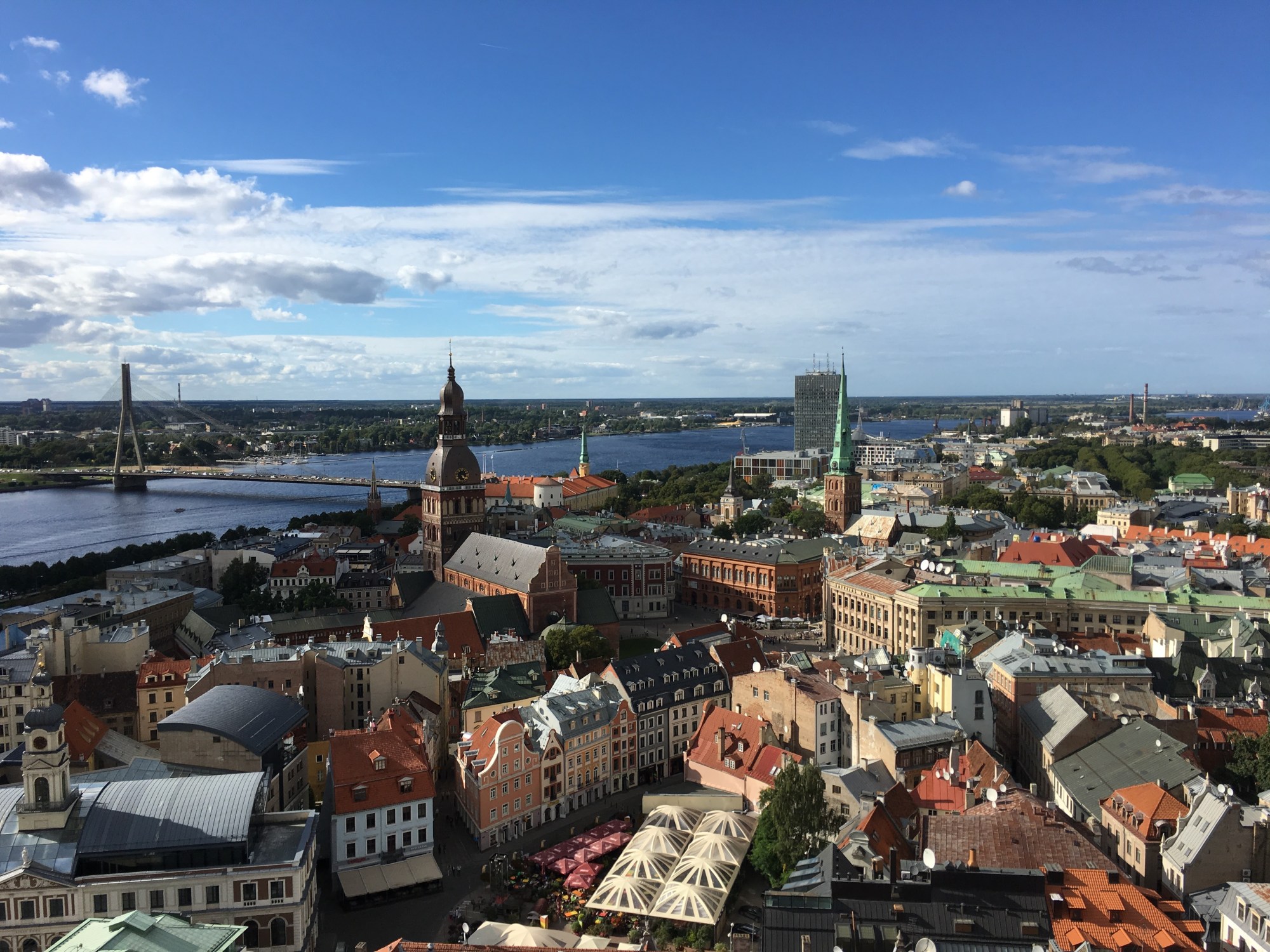
Most of what I had read about the Baltic States was focused on Tallin, Estonia and how amazing it is. While I enjoyed my short visit to Tallin as a part of a three-week Scandinavian adventure, I found Riga (Latvia) and Vilnius (Lithuania) to be much more enticing. Great beer, cool buildings, cold beet soup, waffles, and a wonderful festival made for a great weekend trip to the two Baltic capitals.
Riga, Latvia
Riga’s historic downtown area had beautiful architecture and verdant gardens. As we walked around, the weather turned from sunny to rainy so we found ourselves a beer bar to try some Latvian beers. With a little liquid courage, we climbed to the top of St. Peter’s Church and were rewarded with stunning views over the city. A quick walk then took us to the central square of Riga featured unique architecture, especially the House of the Blackheads.
In the afternoon we took a cab to the Kalnciema Quarter, an artsy neighborhood just outside the city center. Instead of the grand marble buildings found downtown, the houses were of the clapboard variety- it looked like a town from the American wild west. After grabbing some more Latvian beer, we headed back to the hotel for a quick rest before heading out to explore some of pleasant city’s nightlife. We ended the night at a small craft beer bar called Taka and had some great snacks.
The next day started in a clapboard wooden building that houses a restaurant called Makonis. We had hear rumors that Makonis serves all-you-can-eat gourmet waffles and our local waffle sources didn’t let us down. We sampled waffles with feta/veggies, bacon/eggs, peanut butter/jelly, condensed milk/apricot, and many other. It was delicious.


After waffling over which waffles to choose, we headed to the KGB museum. This museum was set up in the former Riga headquarters of the KGB, in a nondescript office building. We took a tour set up by the museum that took us from the front lobby of the office, to the interrogation rooms, to the prison cells, and finally to the execution booth. It was a grim place, but the museum was extremely well done and the tour guides helped to explain the place’s long history of persecution. The same offices were used by Latvian internal police, then by the Soviet Union after taking control of Latvia, then by the Nazi secret police, and finally by the KGB after the fall of the Nazis.
Riga has an impressive set of Art Nouveau buildings in the Alberta Iela area. The pastel-colored buildings were beautiful and well worth strolling by. From Alberta Iela, we took a taxi over to the Riga Central Market, apparently one of the largest in Europe. Only parts of four huge half-domed market halls were full of vendors, but the amount of fresh food available here was impressive. Before hopping on the bus to Vilnius, we grabbed some Uzbek food from a small restaurant outside the market. The plov was outstanding.
The bus ride from Riga to Vilnius was four hours and costs about twenty Euros. We booked our tickets in advance to ensure we had seats and the ride was very comfortable. We had a good experience with the company Lux Express.
Vilnius, Lithuania
After an easy bus ride, we made our way to the hotel to drop our bags off before heading over to the pedestrian area of the city. It turned out that we planned our trip to Vilnius during a weekend-long festival celebrating the city. We found food and craft vendors throughout the pedestrian area, separating the live music venues. It was pretty crowded but the food and music were outstanding. After listening to a few bands, we walked through the Vilnius University campus to a craft beer bar, Beer Library. The staff there was extremely knowledge, the selection of Lithuanian beers was exceptional, and the bar had a great atmosphere. We finished the day off with some fresh pizza before headed back to the hotel to rest up before a full day of exploring Vilnius.
The next morning, we ate breakfast and joined a free city walking tour. The tour taught us that Lithuania was the last country to convert from Paganism to Christianity and that Paganism is still in practice amongst about ten percent of the population. Pre-WWII, the city was considered the Jerusalem of the north, due to its sizable Jewish population. The tour took us to the Uzupio Republic, a tongue-in-cheek independent artist country within the city of Vilnius. After seeing an impressive half-Gothic, half-Baroque church, we ended the tour by taking a funicular up to the top of the Vilnius Castle Complex. The views of the city were very pretty, even in the rainy afternoon.


After grabbing some (more) Lithuanian beers, we stopped in at a traditional Lithuanian restaurant for dinner. My friends and I had only two things on our mind: cold, pink beet soup and fried bread with cheese dip. Both of these things were amazing and extremely filling. I imagine that the soup would have been even better if it was warm outside.
The next morning, the skies turned from grey to blue and we headed over to the Vilnius Cathedral. The neat thing about this cathedral is that the bell tower is separated from the rest of the structure. The two, standing nearby each other in bright white pain were beautiful to see in the now-empty square.
 Travel Frankly